

a059373 · main · 2h ago
fix(board): drops no longer snap back
Linked to ACME-12 from the commit message
Trakkr keeps the delivery record for client projects. Commits, board moves, blockers and hours land in one place — and come out as a report you can hand over.
a059373 · main · 2h ago
fix(board): drops no longer snap back
Linked to ACME-12 from the commit message
Webhook retries for failed syncs
Due 24 Sep 2026 · est 6h
Staging cert expired — client can't review until it's rotated.
Weekly delivery report
Everything above, written up for the client
Illustrative record, assembled from the product's own components. The commit is real.
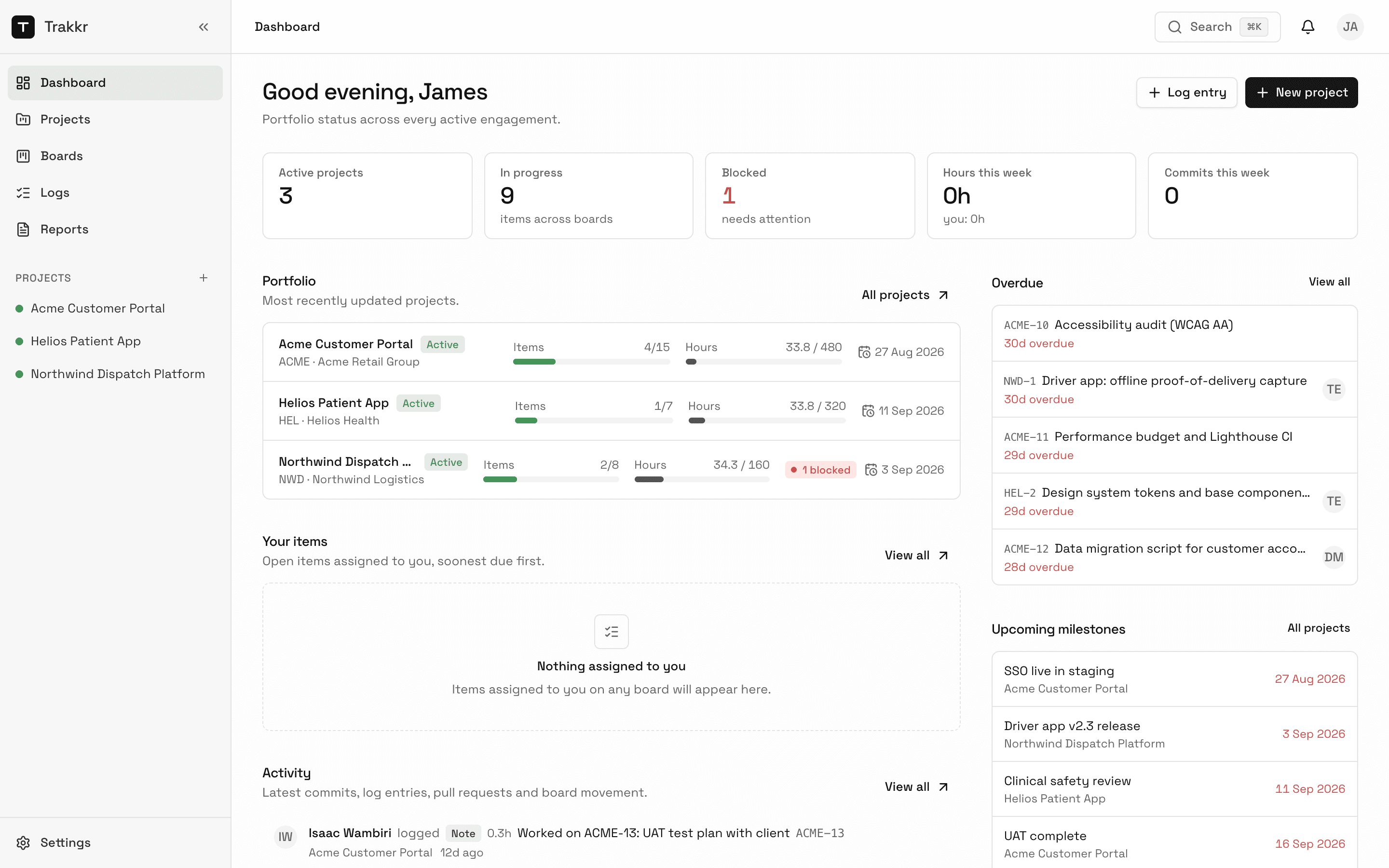
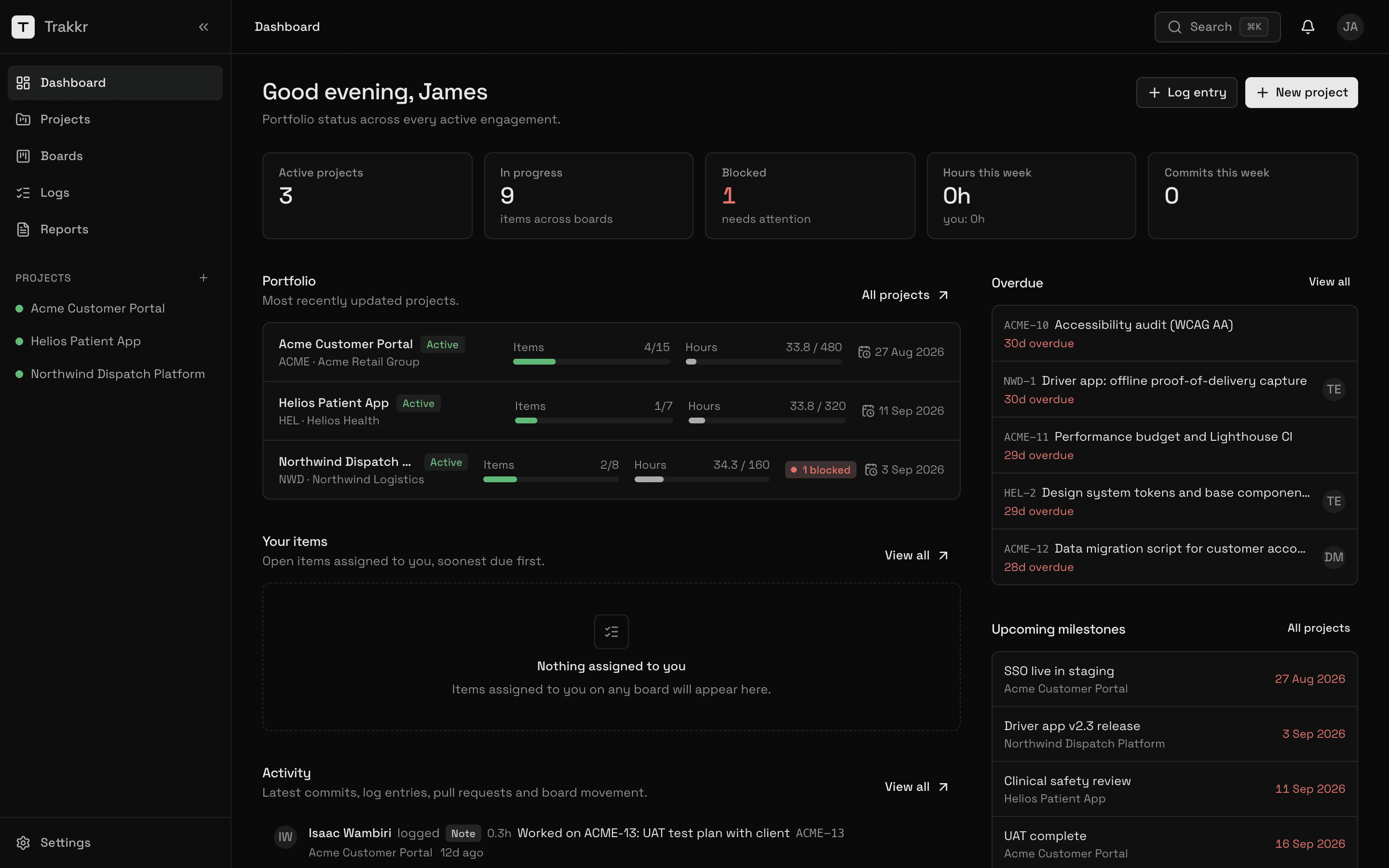
The dashboard, as it runs today — a real screenshot with demo project data.
Point GitHub or GitLab webhooks at Trakkr. Commits arrive on their own, verified by signature, and attach to items when the message mentions a key.
git push → POST /api/webhooks/github → linked to ACME-12
A kanban board per project, developer logs for calls, blockers and decisions, and a floating timer that follows you between tabs.
boards · logs · phases · milestones · timer
Pick a project and a date range. Trakkr writes the delivery report in the formats clients actually open, or raw data if they'd rather have that.
report.docx · report.xlsx · report.pdf · export.csv · export.json
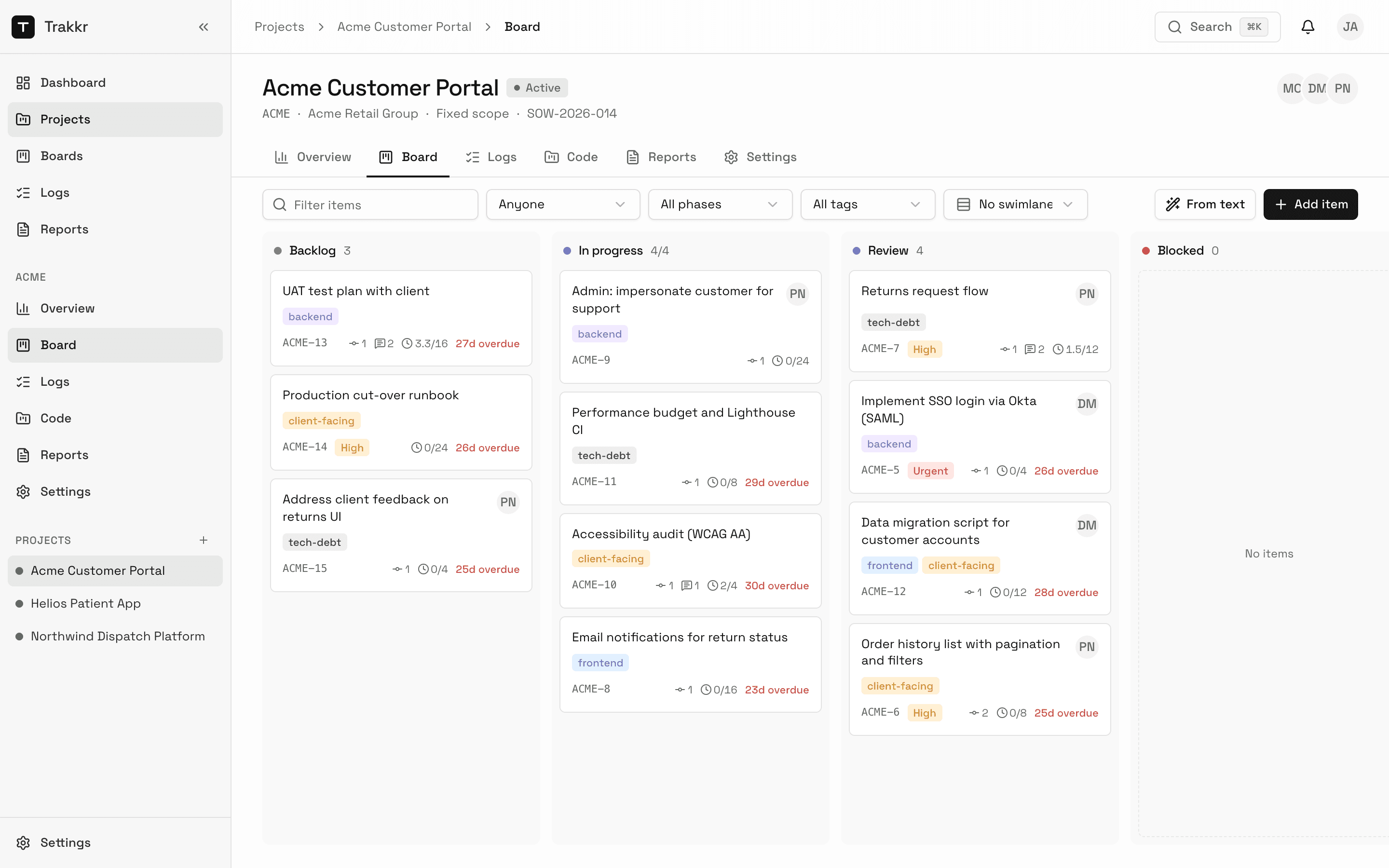
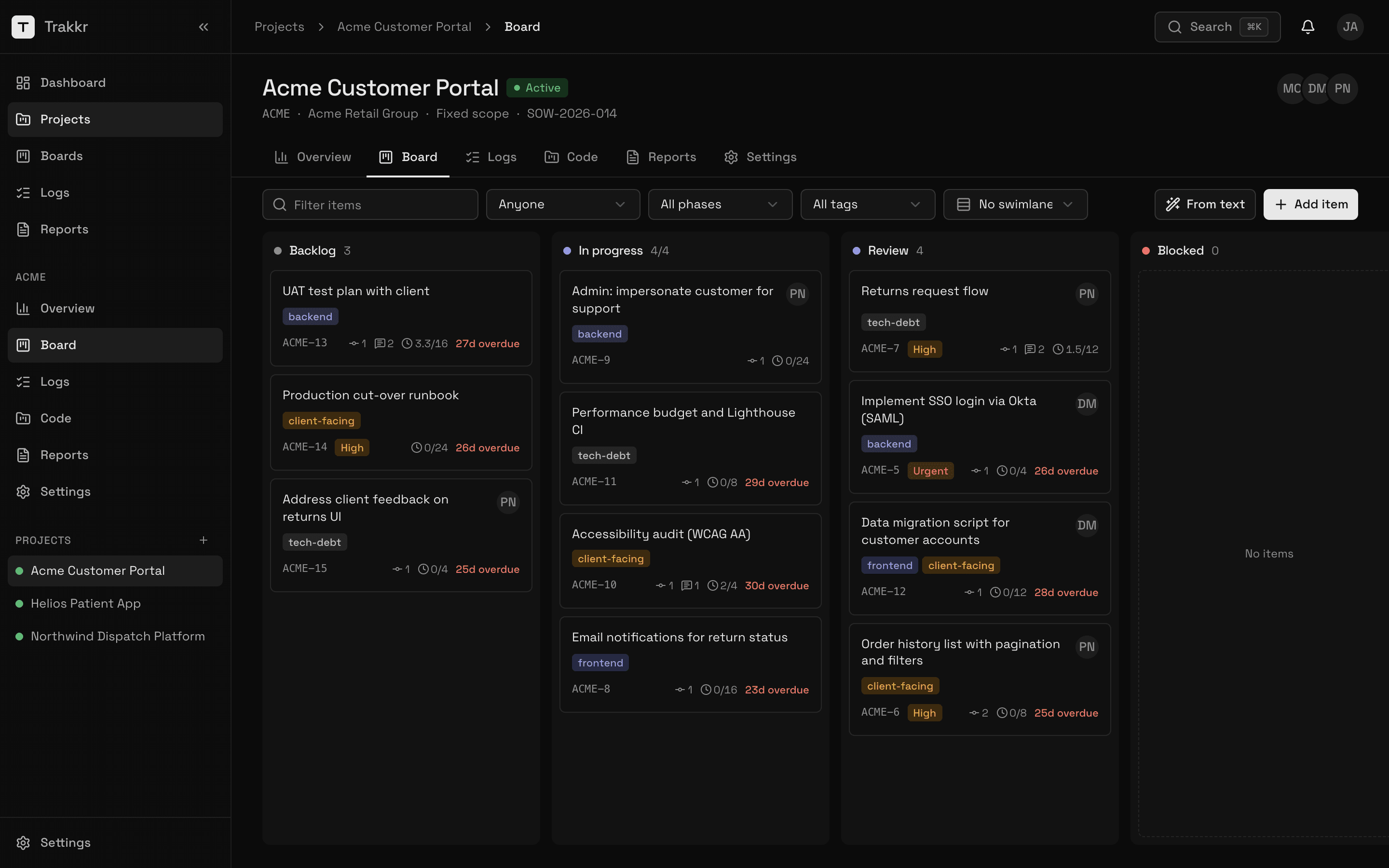
The Acme demo board — a real screenshot, cropped.
Items carry a key like ACME-12 that follows them everywhere: the board, commit messages, logs, reports. Drag an item and the move is recorded; block it and the reason is a log entry, not a memory.
PMs pick their team per project, and people only see the projects they're on. Deadlines, stalled items and quiet repos surface as reminders — a short digest, not a feed.
Personal tokens for scripts; client credentials with rotating refresh tokens for systems. Scoped access, delta sync with a since cursor, and your own IDs via ext: addressing.
Changes flow back out as signed webhooks that say who made them — so a sync partner can ignore the echo of its own writes.
$ curl "$TRAKKR_URL/api/v1/projects?since=2026-09-01T00:00:00Z" \
    -H "Authorization: Bearer trk_pat_····"

{
  "data": [
    { "code": "ACME", "name": "Acme replatform", "status": "ACTIVE" }
  ],
  "pagination": { "page": 1, "pageSize": 50, "total": 1 }
}
POST https://your-system.example/hooks/trakkr X-Trakkr-Event: item.moved X-Trakkr-Signature: sha256=… # HMAC over timestamp.body